
Navigating Boundaries: Steps Before You Hunt
When preparing for a hunt entering new areas brings special difficulties especially when it comes to property lines. A gate that was open year might now be closed or a path that was used before could lead directly into private land. Before you start to get your gear out checking that you are on the side of a boundary can stop legal problems and keep good relationships with landowners.
Understand Maps as Guidelines, Not Guarantees
Digital maps have become very useful for hunters and people who enjoy the outdoors.. It's important to know that a map on a phone screen doesn't always mean you have the right to be there. Maps can be old or wrong. Just because an area is marked as public doesn't mean every road, trail or water area there allows hunting.
To avoid problems find out which organization is in charge of the land you want to go into. It might be a state wildlife agency, a group that manages land or a private company that has rules about access. Make sure to look at the rules check for any signs about access know about any times when the land is closed and learn about the rules for hunting specific animals that might apply to you.
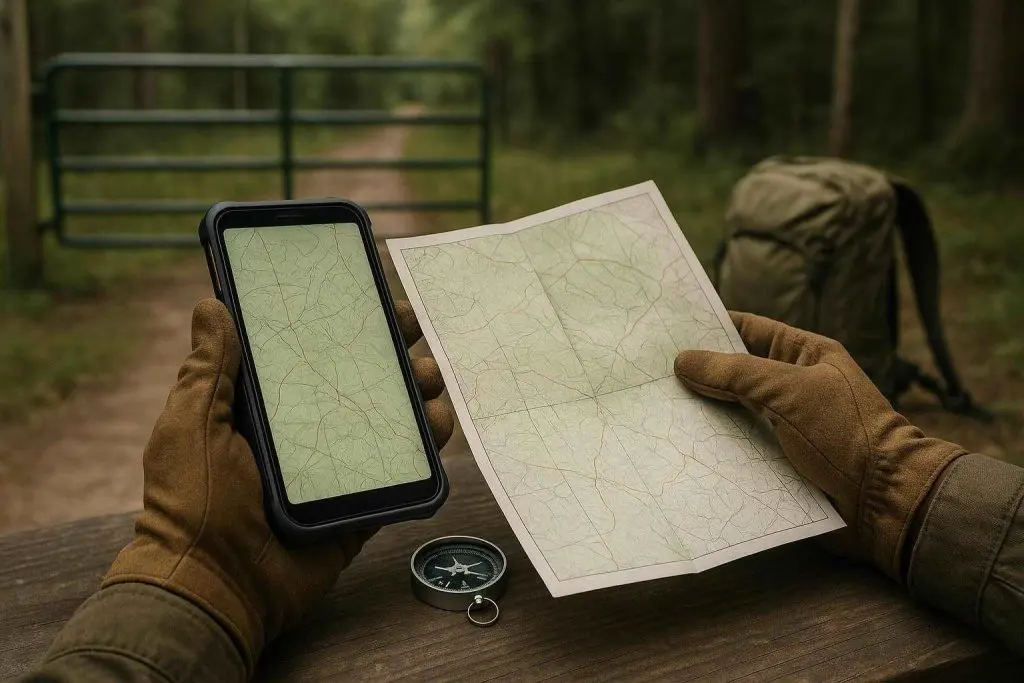
Saving the map for use when you don't have a signal is always an idea. Make sure to write down details like the number of the land parcel the management area and the nearest places to enter. Also have a paper map with you especially if bad weather or a phone that runs out of battery could affect your trip. If you can't explain who is in charge of the land and how you are allowed to be think again about whether you are ready to go hunting.
Clarify Ambiguous Boundaries Before the Hunt
Some signs like a " property" sign, a locked gate or an obvious closure should stop any further thinking.. Other times it can be confusing: old signs that are not clear corners that are not marked or roads that look different on different maps. Just because a public road is next to land doesn't mean you can go through. Also parking at the edge of the road doesn't mean you can go onto a trail that goes beyond.
If the information you have is different pick the recent and correct land management information. Don't be afraid to call the office if you are unsure. Keeping a record of the rules or maps you looked at can help you later. Remember, the area where you hunt can change from year to year; what you knew season might not be true now.
Taking time to check the lines before you start is always smart. When you are not sure it's better to be careful than risk going into areas that are not allowed during your hunt.
Incorporate Boundary Checks into Your Hunting Routine
Having the tools to find your way is just as important as knowing the land. Before you leave your car make sure your phone has the map location services are on and the battery is full. Keep any battery dry and warm and put your paper map in a case.
Having a compass is helpful when you need to find your way especially when natural things block your phone screen. Use the compass not to get around but also to mark places that need special attention like where trails split or where a stream crosses because those are places where you might accidentally cross a line. Setting points to turn back based on uncertain lines will help you stay safe from breaking rules even if that means changing your planned route.
This is also important when you are looking for an animal you have shot. Knowing where the lines are before you start will tell you what you need to do if the animal moves into another area. Don't leave any questions until you are in the middle of the moment.
Interpret Signs as Vital Clues
Physical clues in the field can help you. Depending only on them without looking at your map can lead to problems. New gates that are kept new signs that show the borders or new closure notices should be taken seriously even if they don't match old maps. Taking pictures of these signs can help you remember. They don't mean you can ignore them.
Changes in the land like walls work that is happening or changes in how the land is used can show new rules. Don't try to go around areas or touch signs because that can cause problems with landowners and harm the environment and make it harder to go there again.
If a person in charge or the landowner tells you to leave, be safe and follow the rules. Once you are at a distance contact the right place to ask about the problem instead of arguing about it there.
Final Checklist Before You Head Out
Before you start walking on the path make sure you have done the following:
– Make sure the rules that apply to your hunt are correct including the animals, dates and permits.
– Find out which groups manage the land and the ways to get in and check that there are no areas you might accidentally go into.
– Check that all your tools for finding your way-your map that works without a signal the paper map, the compass and the phone-are working and ready.
– Look at the conditions and any signs or closures you see and compare them with the ones you checked before you left home.
– Make sure your plan for how to get and for finding an animal you have shot doesn't risk going onto areas that are not allowed or know what you need to do to handle that.
– Decide on a way to turn back if you can't check the rules or if the lines are not clear.
This list isn't a formality; it connects the rules with the land you are about to go into.
Leave the Path Better Than You Found It
Knowing the lines is not just about personal duty-it's about a way of thinking that helps everyone share the land. When you park your car make sure you don't block roads, like gates. Keep your car on the roads that are allowed take all your trash with you. Avoid making wider paths by walking through wet areas. If you see that the online maps don't match what you see tell the group instead of making your own paths.
Following these rules helps your hunt and keeps the shared areas in good shape. A good day doesn't just mean what you catch. Also how you treat the land and the lines making sure others can enjoy it too.